You Won’t Believe These Miami Viewpoints I Found for Photography
Miami isn’t just beaches and nightlife—its real magic is in the unexpected viewpoints waiting to be captured. As a photographer, I was blown away by how the city blends urban energy with tropical light. From sunrise over Biscayne Bay to neon reflections in Wynwood, every corner tells a story. These aren’t just photo spots—they’re moments frozen in color, motion, and mood. Let me show you the Miami only locals and keen eyes ever see.
Why Miami is a Photographer’s Playground
Miami stands apart as one of the most visually dynamic cities in the United States, offering photographers an endless array of textures, colors, and contrasts. The city thrives on visual rhythm—where turquoise waters meet pastel Art Deco facades, and sleek glass towers reflect golden sunsets over the bay. This unique blend of tropical climate and architectural diversity creates a natural stage for compelling photography. The interplay between urban development and natural landscapes allows for shots that balance human design with organic beauty, making Miami a rare destination where both cityscapes and seascapes deliver equal impact.
One of the defining features of Miami’s photogenic appeal is its light. The city enjoys more than 250 days of sunshine annually, with soft, diffused morning light and dramatic golden hour glows that stretch across the skyline. The low angle of the sun during early morning and late afternoon casts long shadows and enhances depth, making structures appear more dimensional. Additionally, the reflective surfaces of water, glass, and white stucco walls amplify the brightness, creating opportunities for creative use of highlights and contrast. This quality of light transforms ordinary scenes into vivid compositions, especially when paired with the city’s bold color palette.
The city’s cultural diversity also plays a role in its visual richness. Neighborhoods like Little Havana, Coconut Grove, and Coral Gables each offer distinct architectural styles—from Cuban-inspired courtyards to Mediterranean villas—adding layers of historical and cultural texture to any photo series. Meanwhile, modern developments in Brickell and the Design District introduce minimalist lines and sculptural forms that contrast beautifully with older, more ornate buildings. This juxtaposition invites photographers to explore themes of continuity and change, tradition and innovation.
Equally important is Miami’s transformation from day to night. By sunset, the city begins its second act—neon signs flicker to life, street art glows under spotlights, and waterfront promenades shimmer with ambient reflections. Night photography in Miami is not merely an extension of daytime shooting; it’s a completely different genre that demands new techniques and perspectives. Long exposures, light trails, and controlled use of artificial illumination become essential tools for capturing the city’s electric pulse. With such variety across time, space, and style, Miami rewards photographers who are willing to look beyond the obvious and seek out its quieter, more nuanced corners.
Sunrise at South Pointe Park Pier: Where Sky Meets Sea
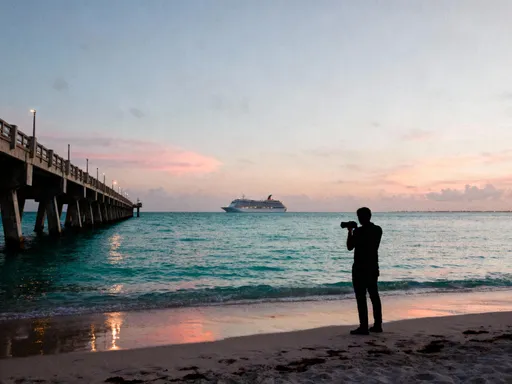
For photographers chasing serenity and spectacle in equal measure, few places in Miami rival the South Pointe Park Pier at sunrise. Located at the southernmost tip of South Beach, this slender stretch of walkway extends into the Atlantic Ocean, offering unobstructed views eastward across the water. As dawn breaks, the sky transitions through a spectrum of soft pinks, lavenders, and golds, mirrored perfectly on the calm surface below. The effect is both intimate and expansive—a moment when the city feels still, before the rhythm of daily life resumes.
Timing is critical when photographing here. The best light typically occurs 30 to 45 minutes before official sunrise, when the horizon begins to glow but the ambient darkness preserves contrast. Arriving early ensures you secure a central position on the pier, which can fill quickly during peak seasons. A tripod is highly recommended for long exposures, especially if you aim to capture silky water effects or silhouetted palm trees against the brightening sky. Using a polarizing filter can help manage glare and deepen the colors in the clouds, while a neutral density filter allows for slower shutter speeds even as daylight increases.
One of the most striking elements of this location is the movement of cruise ships departing from PortMiami. On clear mornings, these massive vessels glide past in the distance, their illuminated decks creating horizontal streaks of light across the frame. Capturing them requires patience and precise timing—set your camera to manual mode, use a shutter speed between 10 and 30 seconds, and focus on the ship’s path rather than its details. The resulting image blends natural beauty with human engineering, a quiet testament to Miami’s dual identity as a tropical escape and a global gateway.
What makes South Pointe particularly special is the absence of crowds during these early hours. Unlike midday, when families and tourists fill the park, the pre-dawn window offers solitude and space to compose without distraction. The sound of waves lapping against the pilings, the occasional call of seabirds, and the cool ocean breeze all contribute to a meditative atmosphere that enhances creativity. For mothers or women managing household routines, this quiet time can feel like a rare personal retreat—a chance to reconnect with passion and purpose through the lens. Whether you're a seasoned photographer or simply someone who appreciates beauty, South Pointe at sunrise offers a reset, a pause, and a perfect first frame of the day.
Biscayne Observation Deck: Urban Panorama with a Waterfront Twist
For a sweeping view of Miami’s skyline framed by water and sky, the vantage points along Biscayne Bay are unmatched. While there is no single official “observation deck,” several public access areas—including Museum Park, the American Airlines Arena perimeter, and the MacArthur Causeway bridges—offer elevated perspectives ideal for panoramic photography. From these spots, the city rises in a dramatic arc, with Brickell’s financial towers, Downtown’s geometric clusters, and the PortMiami cranes forming a layered horizon line that reflects vividly on the bay’s surface.
The reflective quality of the water adds a powerful dimension to compositions, effectively doubling the visual impact of the skyline. During golden hour, when the sun hovers low over the western mainland, the glass facades of high-rises ignite in warm tones, their reflections stretching across the bay like liquid fire. This mirror effect allows photographers to create symmetrical images that emphasize balance and scale. To maximize this phenomenon, position yourself at water level or slightly above, using a wide-angle lens to capture both the buildings and their inverted counterparts. A tripod remains essential for sharp results, especially when shooting at slower shutter speeds to smooth ripples into glass-like surfaces.
Leading lines play a crucial role in structuring compelling shots from this area. The marinas, with their orderly rows of docked yachts, guide the eye toward the skyline, while the arcing spans of the Venetian and Julia Tuttle Causeways introduce dynamic curves into the frame. Bridges, in particular, offer rhythmic repetition and depth, helping to anchor the composition. Photographers can also incorporate foreground elements—such as sailboat masts, fishing poles, or palm fronds—to add context and scale. These small details ground the image in place, transforming a generic skyline shot into a story about Miami’s relationship with the sea.
For those seeking variety without the tourist crowds, Museum Park provides a quieter alternative to more popular waterfront spots. Home to the Pérez Art Museum Miami and the Frost Science Museum, the park features landscaped walkways, shaded benches, and open lawns that double as ideal foregrounds. The modern architecture of the museums themselves can be integrated into wider compositions, adding geometric interest. Early evening is often the best time to visit, as the city lights begin to emerge while residual daylight softens the shadows. With careful planning and a mindful approach to framing, the Biscayne waterfront becomes not just a backdrop, but a living canvas of light, motion, and reflection.
Wynwood Walls and Beyond: Street Art as a Living Canvas
No neighborhood in Miami pulses with creative energy quite like Wynwood. Once an industrial district, this vibrant enclave has been transformed into an open-air gallery where every wall tells a story. The Wynwood Walls, a curated collection of large-scale murals by internationally renowned artists, serve as the centerpiece—but the true photographic treasure lies in the surrounding blocks, where spontaneous graffiti, layered textures, and unexpected color combinations cover nearly every surface. Here, street art isn’t static; it evolves daily, making each visit a unique visual experience.
For photographers, the challenge—and the joy—lies in navigating this kaleidoscopic environment without succumbing to visual overload. While the main walls attract crowds and Instagrammers, quieter alleys like NW 2nd Avenue between 20th and 24th Streets offer equally powerful imagery with fewer distractions. These side streets often feature murals with greater depth and narrative complexity, from surreal portraits to abstract explosions of pattern. To capture their essence, approach with intention: study the composition before raising your camera, look for symmetry or contrasting elements, and consider how natural light interacts with the surface. Mid-morning light, when the sun angles across the narrow streets, brings out texture and shadow, enhancing the three-dimensionality of the artwork.
Incorporating human elements can elevate a street art photo from documentation to storytelling. A cyclist pausing beside a mural, a dancer stretching against a painted backdrop, or a child pointing at a whimsical character all add scale, movement, and emotion. However, ethical considerations are paramount. Always be respectful of residents and business owners—ask permission when photographing people, especially children, and avoid disrupting daily life. Street photography at its best captures authenticity without intrusion, preserving dignity alongside artistry.
Wynwood also offers excellent opportunities for experimenting with motion blur and depth of field. Using a slower shutter speed while panning with a moving subject—such as a scooter gliding past a vibrant wall—creates a dynamic effect that emphasizes speed and energy. Alternatively, a shallow depth of field can isolate a single detail within a larger mural, drawing attention to intricate brushwork or symbolic imagery. For smartphone photographers, many newer models offer portrait mode and manual controls that make these techniques accessible without professional gear. The key is to remain curious, patient, and open to surprise—because in Wynwood, the next unforgettable shot might be just around the corner.
Oleta River State Park: Nature’s Hidden Frame in the City
Just minutes from downtown Miami, Oleta River State Park offers a striking contrast to the city’s fast pace and bright lights. As the largest urban park in the state, it spans over 1,000 acres of mangrove forests, tidal creeks, and coastal hammocks, providing a sanctuary for both wildlife and photographers seeking organic compositions. Here, the rhythm slows, and the light changes—filtered through dense canopies, it becomes soft and dappled, casting intricate patterns on the water and trail. This natural diffusion creates ideal conditions for macro and landscape photography alike, minimizing harsh contrasts and enhancing tonal range.
Kayakers and paddleboarders glide silently through the narrow waterways, their reflections breaking into ripples with each stroke. Capturing these moments requires patience and timing. Position yourself at a bend in the river or near a dock where movement naturally converges. Use a telephoto lens to compress the scene and isolate subjects, or a wide-angle to include the surrounding greenery. Early morning is the most productive time, when mist hovers above the water and birds—herons, egrets, and ibises—move through the shallows in search of food. A fast shutter speed (1/1000 second or higher) freezes wingbeats and splashes, while a slower setting can blur motion for a dreamlike effect.
The park also supports drone photography in designated areas, allowing for aerial perspectives that reveal the labyrinthine patterns of the mangroves and the interplay between land and water. Always check current regulations before flying, as rules may vary by season or environmental conditions. When used responsibly, drones can capture breathtaking overhead shots that emphasize the park’s scale and ecological complexity. For ground-level photographers, the network of trails offers endless framing opportunities—twisted roots, bromeliads clinging to branches, and sunlight piercing through leaves all invite close-up exploration.
What makes Oleta especially meaningful for many women, particularly those balancing family and personal interests, is its sense of peace and renewal. It’s a place where one can breathe deeply, walk without distraction, and reconnect with nature’s quiet beauty. A camera becomes more than a tool—it becomes a companion in mindfulness, helping to focus attention on small wonders often overlooked. Whether photographing a dragonfly perched on a reed or the reflection of sky in a still pool, the experience is meditative, grounding, and deeply restorative.
Design District Details: Architecture That Demands Attention
Miami’s Design District is a masterclass in contemporary architecture and curated aesthetics. Far from the pastel nostalgia of South Beach, this neighborhood embraces minimalism, bold geometry, and artistic integration. Sleek concrete facades, angular sculptures, and landscaped courtyards create a refined urban environment where every line feels intentional. For photographers, the area offers a wealth of opportunities to explore symmetry, shadow, and negative space—elements that elevate architectural photography from documentation to art.
One of the most photographed intersections is NE 40th Street and NE 1st Avenue, where the Institute of Contemporary Art and the surrounding boutiques present clean, monochromatic surfaces ideal for high-contrast shots. At midday, when the sun is directly overhead, deep shadows carve out recessed windows and doorways, emphasizing texture and depth. However, this same lighting can be unforgiving—overexposed white walls and blown-out highlights are common pitfalls. To avoid this, visit during the late afternoon when the sun angles across the buildings, creating long shadows and warm highlights that enhance dimensionality.
The district’s public art installations—such as Daniel Arsham’s eroded Porsche or Urs Fischer’s giant bronze lamp—serve as powerful focal points. These sculptures are designed to interact with their surroundings, and photographers can use reflections, scale distortion, and forced perspective to create imaginative compositions. A wide-angle lens exaggerates the size of the lamp, making it appear to loom over the street, while a telephoto lens compresses the scene, placing the sculpture in dialogue with the skyline.
Many of the courtyards and side passages, such as those behind the Saint Laurent and Alaïa stores, are open to the public and offer sheltered spaces free of traffic and crowds. These areas are perfect for experimenting with framing—using archways, columns, or hanging plants to create natural borders within the image. The combination of controlled design and organic greenery produces a harmonious tension that resonates with viewers. For women who appreciate order, beauty, and intentionality, the Design District is not just a shopping destination but a visual retreat—a place where creativity and calm coexist.
Night Magic: Capturing Miami’s Electric Pulse After Dark
As the sun sets, Miami sheds its daytime skin and reveals a different kind of beauty—one defined by light, movement, and energy. Night photography in the city is a thrilling challenge, requiring technical precision and creative vision. Areas like Brickell City Centre, Bayfront Park, and Ocean Drive come alive with illuminated signs, passing headlights, and ambient glows that transform the urban landscape into a dynamic light show. With the right approach, even a simple street corner can become a canvas of color and motion.
One of the most effective techniques for capturing Miami after dark is the long exposure. Using shutter speeds of 10 to 30 seconds, photographers can record the trails of car lights along avenues like Brickell Key Boulevard, turning traffic into ribbons of red and white that weave through the frame. A tripod is essential for stability, but when one isn’t available, bracing the camera against a railing or bench can reduce shake. Setting the ISO between 100 and 200 minimizes noise, while an aperture of f/8 to f/11 ensures sharpness across the scene. Manual focus is often preferable, as autofocus can struggle in low light.
Reflections play a starring role in nighttime compositions. Puddles, glass buildings, and wet streets after rain multiply the city’s lights, creating symmetrical patterns and doubling the visual impact. The area around the Miami Central Station and the Riverwalk offers numerous opportunities for such shots, especially when fountains or water features are lit from below. Including these elements adds depth and whimsy to urban nightscapes.
Safety is an important consideration, particularly for solo photographers. Stick to well-lit, populated areas, remain aware of surroundings, and avoid obstructing pedestrian or vehicle traffic. Many of Miami’s best night shots can be taken from sidewalks, parks, or observation decks without entering risky zones. For women who may feel cautious about evening outings, bringing a friend or joining a local photography walk can provide both companionship and inspiration. The city at night is not just vibrant—it’s welcoming to those who approach it with respect and preparation.
Conclusion
Photographing Miami isn’t about ticking off famous landmarks—it’s about chasing light, texture, and rhythm in places others overlook. Each viewpoint offers not just a backdrop, but a mood, a moment, a memory in the making. With the right perspective, even a busy intersection can feel poetic. So grab your camera, step off the beaten path, and let the city reveal itself—one frame at a time.