This Is Yellowstone Like You’ve Never Seen It Before
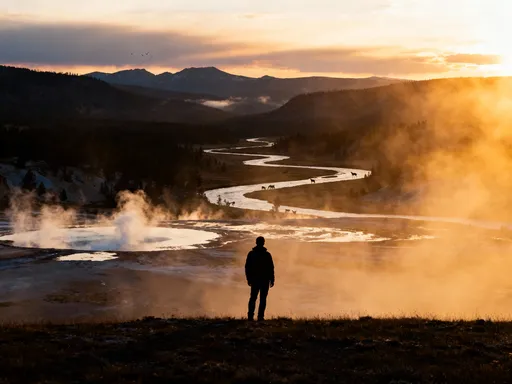
You know that feeling when nature just hits you in the chest? That’s Yellowstone on slow mode. I’m talking about trading rush-hour geyser crowds for sunrise fog rolling over steaming rivers, about hearing wolves howl instead of tour buses. This isn’t check-list tourism — it’s deep immersion. Over days, not hours, I discovered how the park’s wild terrain transforms when you give it time. And trust me, the land tells its stories only to those who stay awhile.
The Myth of the Must-See List
Most visitors to Yellowstone spend less than 48 hours in the park, rushing from Old Faithful to the Grand Prismatic Spring, snapping photos, then moving on. This checklist approach may capture images, but it misses the essence of what makes Yellowstone extraordinary. The park spans over 2.2 million acres, encompassing alpine forests, vast meadows, volcanic basins, and one of the world’s largest active calderas. To experience it meaningfully, experts recommend staying four to five days — a timeline that allows travelers to move beyond sightseeing into genuine connection. The average visitor sees only a fraction of what lies beneath the surface, not because they lack interest, but because they lack time.
When you slow down, your perception shifts. Instead of measuring success by how many landmarks you’ve seen, you begin to notice subtle changes: the way morning light shifts across a thermal pool, the sound of bison hooves on frozen ground, or the quiet hush that falls over a valley at dusk. This shift isn’t just emotional — it’s neurological. Studies in environmental psychology suggest that prolonged exposure to natural environments reduces stress, enhances attention, and deepens sensory awareness. In Yellowstone, where geothermal activity pulses beneath your feet and wildlife moves on ancient rhythms, this effect is amplified. The land invites you not to look, but to listen.
Rushing through iconic sites like Old Faithful may satisfy a tourist’s checklist, but it creates a shallow engagement with the landscape. Eruptions are predictable, yes, but the surrounding ecosystem is not. The steam that lingers after a geyser blows, the algae patterns shifting in a hot spring, the birds that dart through the plume — these details unfold slowly. They require patience. They reward stillness. When you allow yourself to linger, you stop consuming nature and start participating in it. That is the first step toward a deeper travel experience — one where wonder replaces itinerary.
Choosing Your Zone: Why Terrain Dictates Rhythm
Yellowstone is not a single landscape but a mosaic of five distinct geological zones: geyser basins, canyons, lakes, mountain ranges, and river valleys. Each has its own rhythm, its own pace, and its own way of revealing itself. The key to a meaningful visit lies in matching your movement to the terrain. Thermal areas, with their bubbling pools and hissing vents, demand stillness. You cannot rush a hot spring. Its colors change with temperature, light, and microbial life — shifts visible only over hours or days. In contrast, the river valleys and forest trails invite a steady, rhythmic pace, one that mirrors the flow of water or the migration of elk.
Consider Norris Geyser Basin, one of the park’s most dynamic thermal areas. During a 36-hour stay near the basin, I watched as morning fog lifted to reveal new steam patterns rising from the Porkchop Geyser. By midday, the colors in Emerald Spring intensified under direct sunlight. At dusk, the ground seemed to breathe as vents released warm vapor into the cooling air. These are not dramatic events, but they are profound. They speak of a living, breathing earth — one that reveals its secrets only to those who remain present.
Micro-movements define the thermal zones. A mud pot bubbles slowly, its rhythm dictated by underground pressure. A thermal pool shifts from turquoise to orange as microbes react to changing conditions. These changes are too gradual for the hurried eye, but for the attentive observer, they become a kind of language. Over time, you begin to read the land like a story — one written in steam, color, and sound. The lesson is clear: in Yellowstone, time is not an obstacle to overcome, but a tool for deeper understanding.
By choosing to focus on one zone at a time, visitors gain more than knowledge — they gain intimacy. Instead of skimming the surface of ten locations, you dive deep into one. This focused approach allows you to witness transitions others miss: the way a hot spring’s edge crystallizes overnight, or how wildlife adapts to geothermal warmth in winter. It transforms the park from a collection of attractions into a living system — complex, interconnected, and deeply alive.
Slow Entry: Arriving with Intention
How you enter Yellowstone shapes how you experience it. Most visitors arrive through the south or west entrances, often during peak hours, and are immediately funneled into crowded parking lots and congested roads. A more thoughtful approach is to enter through the north or east gates, where traffic is lighter and the transition into wilderness feels more gradual. Gardiner, Montana, at the north entrance, offers a quieter gateway, especially when approached at dawn after an overnight stay in the town. The early morning light softens the landscape, and the air carries the scent of pine and damp earth.
Arriving at first light sets a tone of reverence. Without the noise of crowds, you hear the park’s natural sounds: the distant call of a raven, the rustle of a deer in the underbrush, the faint hiss of a distant geyser. This sensory clarity allows for a deeper connection from the start. It signals that this is not a casual visit, but a deliberate encounter with wildness. To support this intention, many travelers choose accommodations just outside the park boundaries — lodges or cabins that allow early entry before the mid-morning rush.
Once inside, consider ditching the car for the first few hours. Walking or biking along the Lamar Valley road or the path near Mammoth Hot Springs shifts your relationship to the landscape. You move at nature’s pace, not the pace of a GPS. You notice details: a spiderweb glistening with dew, the texture of tree bark, the way sunlight filters through the canopy. This slow entry isn’t just practical — it’s symbolic. It marks the transition from daily life to a different kind of time, one measured not in minutes, but in moments of presence.
Park rangers often recommend beginning your visit with a guided walk or a quiet sit in a meadow. These practices help recalibrate your senses, tuning you to the subtle rhythms of the environment. When you arrive with intention, you’re not just visiting Yellowstone — you’re preparing to receive it.
Deep Time in the Thermal Zones
The geysers and hot springs of Yellowstone are often treated as timed attractions — destinations to reach before the next eruption. But their true magic lies not in spectacle, but in stillness. A geyser erupts, yes, but what happens in the hours between? Steam curls from vents in ever-changing patterns. Mineral deposits build slowly, layer by delicate layer. Light transforms the colors of Grand Prismatic Spring throughout the day: deep blue at noon, molten gold at sunset, ghostly silver under moonlight. These shifts are not dramatic, but they are profound.
Spending an entire afternoon at Midway Geyser Basin, for example, reveals a landscape in constant, quiet motion. Excelsior Geyser may not erupt daily, but its massive crater steams continuously, its waters shifting from deep blue to milky turquoise. The runoff channels glow with orange and green microbial mats, colors that pulse with the sun’s angle. At sunset, the basin takes on a dreamlike quality, as steam rises like breath into the cooling air. There are no crowds at this hour, no voices competing with the wind. Just the slow, steady pulse of the earth.
One of the most transcendent experiences I’ve had in Yellowstone was staying past sunset at Mammoth Hot Springs. By headlamp, I watched calcium carbonate terraces glisten like frost. Under moonlight, they seemed to glow from within, their intricate formations casting delicate shadows. The air was still, and the only sound was the faint trickle of mineral-rich water building new layers overnight. This is deep time — not the time of clocks, but of geological change, of slow, inevitable creation.
Safety and etiquette remain essential. Boardwalks protect both visitors and fragile formations. But even within these boundaries, you can find quiet spots to observe. Step off the main path — while staying on designated trails — and sit. Breathe. Watch. The thermal zones are not passive displays; they are active, evolving systems. To witness them fully, you must be willing to wait, to return, to see them again and again. Only then do they begin to speak.
Wildlife Rhythms: When Stillness Meets Movement
Yellowstone is home to one of the most intact temperate ecosystems in the world, supporting grizzly bears, wolves, elk, bison, and hundreds of bird species. But seeing wildlife isn’t just about luck — it’s about rhythm. Animals move according to ancient patterns: elk descend to valley floors at dawn, bison cross rivers when temperatures rise, foxes hunt at twilight. To witness these moments, you must align your pace with theirs.
Slow travel increases sightings dramatically. A study by the National Park Service found that visitors who spent more than three days in the park reported significantly higher wildlife encounters than those on day trips. This isn’t coincidence. When you stay longer, you’re present at the right times. You’re there at dawn when a herd of elk emerges from the trees, their breath visible in the cold air. You’re there at dusk when bison move across the Lamar Valley, their silhouettes stark against the fading light. You’re there when a red fox darts across a snow-covered meadow, pausing just long enough for you to catch its gaze.
Riverbanks and wetlands are particularly rich at twilight, when animals come to drink. The Hayden Valley, with its wide-open meadows and slow-moving streams, is a prime location. Sitting quietly on a rise, binoculars in hand, you may see otters playing in the current, ospreys diving for fish, or a grizzly bear foraging along the shore. These moments unfold slowly. They require patience. They reward stillness.
One morning, tracking fresh wolf prints in the snow near Slough Creek, I never saw the animal itself. But the path told a story — of a hunt, of a territory, of a life lived on instinct. I followed the prints for over an hour, imagining the wolf’s movements, its awareness of the wind, its connection to the land. In that moment, I felt not like a spectator, but like a participant in a much older story. Ethical viewing means maintaining distance, using optics instead of approaching, and never disrupting natural behavior. When we move slowly and respectfully, we become part of the ecosystem, not just observers of it.
Staying Grounded: Lodging and Local Anchors
Where you stay in Yellowstone shapes how you experience it. Many visitors bounce from site to site, chasing sunsets and eruptions. But choosing a single base camp — a lodge or cabin that becomes your anchor — allows for repeated visits to the same areas at different times of day. Canyon Village, perched near the Grand Canyon of the Yellowstone, offers access to both thermal features and hiking trails. Staying here means you can visit the Lower Falls at sunrise, return at noon to see the rainbows in the mist, and come back at dusk when the canyon glows amber in the fading light.
Lake Yellowstone Hotel, on the shores of the continent’s largest high-elevation lake, provides another ideal base. From here, you can kayak at dawn, hike the West Thumb Geyser Basin in the afternoon, and sit by the water at night, listening to loons call across the lake. Repeated exposure to the same landscape reveals changes others miss: the way ice forms along the shore, the shifting patterns of bird migration, the subtle color shifts in a hot spring as seasons change.
On-site lodging offers convenience, but off-site stays in gateway towns like West Yellowstone or Gardiner provide more space, quieter surroundings, and earlier access to the park. Many visitors find that sleeping just outside the boundary allows for a gentler transition into the park’s rhythm. It also supports local economies, from family-run lodges to small cafes serving hearty breakfasts before dawn hikes.
Park rangers often lead guided slow-walks — meditative hikes focused on observation rather than distance. These programs, available in summer months, encourage participants to move quietly, to notice small details, and to listen deeply. They are not about fitness, but about presence. By anchoring your stay in one place and returning to the same trails, you build a relationship with the land. You stop being a visitor and start becoming a witness.
Leaving Differently: The Lasting Shape of Slow Terrain
After four or five days in Yellowstone, something shifts. Your sense of time changes. You notice the pace of your breath. You become aware of small sounds — the rustle of leaves, the distant call of a bird. The park’s vastness no longer feels overwhelming, but grounding. This transformation is not temporary. Extended exposure to wild landscapes has been shown to improve mental clarity, reduce anxiety, and foster a deeper sense of connection to the natural world. In Yellowstone, where geological forces shape the land over millennia, this effect is especially powerful.
Journaling, sketching, or photography can deepen this experience. These practices slow you down further, forcing you to observe with intention. A sketch of a thermal pool requires you to study its colors, its edges, its steam patterns. A journal entry about a dawn hike captures not just what you saw, but how you felt. These acts of reflection help integrate the experience into your inner life.
Many visitors find that the rhythm of the land stays with them long after they leave. They carry it into their daily routines — in the way they walk, the way they listen, the way they pause. One woman I spoke with described returning to her suburban home and noticing, for the first time, the flight pattern of sparrows in her backyard. Another said he began waking earlier, drawn to the quiet of morning the way he had been drawn to dawn in the Lamar Valley.
The final lesson of slow travel in Yellowstone is this: the park isn’t a place you see — it’s a presence you absorb. Its true terrain isn’t just volcanic basins and alpine ridges, but the internal landscape it shapes within you. By slowing down, we stop consuming views and start connecting with forces far older than us. In a world that races, choosing slowness becomes an act of respect — for the land, for the wildlife, and for our own capacity to wonder. Let the earth speak. You just have to stay long enough to hear it.