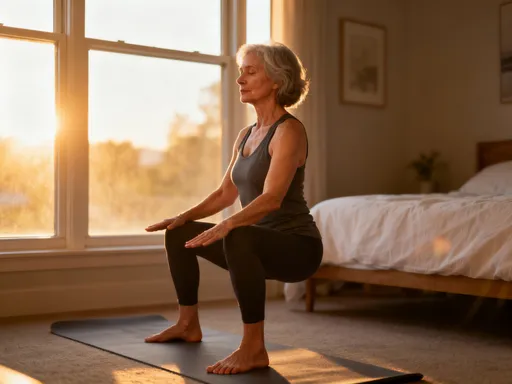
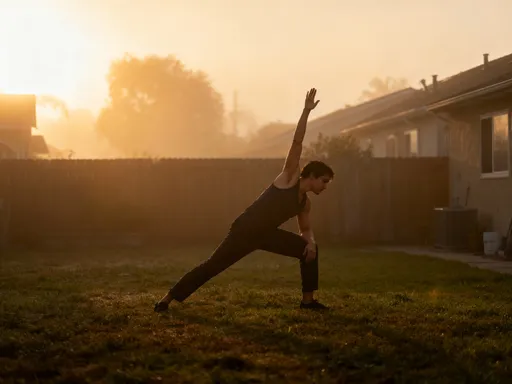
Bend Without Breaking: My Real Flexibility Journey That Changed Everything
Flexibility isn’t just about touching your toes—it’s about how freely you move through life. For years, I ignored it until stiffness started slowing me down. Simple tasks like tying shoes or reaching for a high shelf became small struggles. Turns out, improving flexibility isn’t reserved for yogis or elite athletes. With small, consistent movements, real changes happen—even after decades of inactivity. This is a wake-up call for your body, a shift in how you think about movement and long-term health. The good news? It’s never too late to begin, and the benefits go far beyond physical ease.
The Hidden Problem: Why Most People Overlook Flexibility
Most people measure health by weight, strength, or endurance—but flexibility rarely makes the list. Yet, it plays a quiet but powerful role in daily life. Unlike heart rate or calorie intake, flexibility doesn’t come with a number on a screen. There’s no app that alerts you when your range of motion drops by 20%. Because it’s invisible, it’s easy to ignore—until you can’t bend to pick up a dropped spoon or feel a sharp pull when turning in the car.
Stiffness doesn’t appear overnight. It builds gradually, often mistaken for normal aging. Tight hips from long hours at a desk, stiff shoulders from carrying bags or stress, a rigid spine from poor posture—these are not just inconveniences. They are early signs of reduced mobility. Over time, this loss affects balance, increases the risk of falls, and makes everyday movements more difficult. Research from the American College of Sports Medicine shows that adults lose about 1% of their joint flexibility each year after age 40 if they don’t actively maintain it. That may sound small, but over a decade, it can mean the difference between climbing stairs with ease and needing support.
What’s more, poor flexibility can contribute to chronic pain. When muscles are tight, they pull on joints and alter alignment. This misalignment places extra stress on the lower back, knees, and neck—areas where many women over 30 report discomfort. Yet, instead of addressing the root cause, people often rely on pain relievers or rest. Flexibility is not a luxury; it’s a foundational element of physical resilience. Ignoring it is like ignoring dental hygiene—eventually, the cost becomes harder to ignore.
What Flexibility Really Means (Beyond Stretching)
When most people think of flexibility, they picture someone doing the splits or touching their palms flat to the floor. But true flexibility is more complex than that. It’s not just about how far you can stretch—it’s about how well your body moves as a whole. Flexibility involves muscles, tendons, joints, and a network of connective tissue called fascia. It’s also governed by the nervous system, which controls how much a muscle will lengthen before resisting.
For example, when you reach for something on a high shelf, your shoulder joint rotates, your upper back extends, and your side muscles lengthen. This coordinated movement depends on multiple systems working together. If one area is tight—say, the chest muscles from hunching over a phone—the shoulder can’t move freely, even if the arm itself is strong. This is why flexibility isn’t just about passive stretching; it’s about neuromuscular coordination. Your brain must learn to allow safe, controlled movement across a full range of motion.
There are different types of flexibility, too. Static flexibility refers to how far you can hold a stretch, like touching your toes. Dynamic flexibility is how well you move through space, such as swinging a leg forward during a walk. Both are important. A person might be able to fold in half in a static stretch but still walk stiffly because their dynamic control is limited. True functional flexibility means moving with ease, control, and confidence in daily life—not just during a workout.
Understanding this broader definition changes how we approach improvement. It’s not about forcing the body into extreme positions. It’s about restoring natural movement patterns, releasing tension, and building awareness. When you view flexibility as part of your body’s overall function—not just a performance skill—you begin to see it as essential, not optional.
The Science-Backed Benefits You Can’t Ignore
The benefits of improved flexibility are not just anecdotal—they are supported by science. One of the most significant advantages is injury prevention. When muscles and joints can move through their full range, they are less likely to strain or tear during everyday activities. A study published in the Journal of Strength and Conditioning Research found that participants who performed regular stretching had a 30% lower risk of musculoskeletal injuries compared to those who did not. This is especially important for women managing household tasks, lifting children, or engaging in recreational activities like gardening or hiking.
Beyond injury prevention, flexibility enhances circulation. Stretching increases blood flow to muscles and connective tissues, delivering oxygen and nutrients while removing metabolic waste. This process supports faster recovery after physical activity and reduces muscle soreness. For women managing busy schedules, this means less fatigue and more energy throughout the day. Improved blood flow also supports joint health by nourishing cartilage and reducing stiffness, which is particularly beneficial as estrogen levels decline during perimenopause and menopause.
Another well-documented benefit is pain reduction, especially in the lower back. Tight hamstrings and hip flexors are common culprits in chronic back pain. When these muscles are shortened from prolonged sitting, they pull on the pelvis, tilting it forward and increasing pressure on the spine. Stretching these areas helps restore alignment and relieve tension. A 2020 review in the journal Physical Therapy concluded that flexibility training, when combined with core strengthening, significantly reduced lower back pain in adults over 30.
Posture is another area where flexibility plays a crucial role. Poor posture—rounded shoulders, forward head, arched lower back—is often caused by muscle imbalances. Tight chest muscles pull the shoulders forward, while weak upper back muscles fail to counteract the pull. Regular stretching of the chest, neck, and hip flexors, along with strengthening exercises, can gradually correct these imbalances. Over time, this leads to a more upright, confident posture that reduces strain on the spine and improves breathing.
Finally, flexibility supports long-term independence. As we age, maintaining mobility becomes increasingly important. The ability to bend, reach, twist, and step freely affects everything from dressing yourself to getting in and out of a car. Research from the National Institute on Aging shows that older adults with better flexibility are more likely to remain active and independent. By investing in flexibility now, you’re not just improving comfort—you’re building resilience for the future.
Common Myths That Hold People Back
Despite its importance, many people avoid flexibility training because of deeply held misconceptions. One of the most common myths is that you’re too old to improve. “I’m not flexible, and I never will be,” is a phrase often heard in fitness classes. But science says otherwise. Studies have shown that adults in their 60s, 70s, and beyond can significantly increase their range of motion with consistent stretching. The body remains adaptable throughout life. Connective tissue responds to gentle, regular movement at any age. The key is not intensity, but consistency.
Another myth is that stretching prevents all injuries. While flexibility reduces risk, it’s not a magic shield. Some people believe that if they stretch once a week, they’re protected. But like brushing your teeth, flexibility requires daily care. Short, frequent sessions are more effective than occasional intense stretching. Also, stretching alone isn’t enough. It must be combined with strength training and proper movement habits to create balanced, resilient muscles.
Some assume that only extreme stretching—like splits or backbends—counts as progress. This belief can be discouraging, especially for beginners. But functional flexibility isn’t about performance. It’s about being able to move comfortably through daily life. You don’t need to do a full split to benefit. Even small improvements—like being able to tie your shoes without bending your knees—make a real difference.
Another misconception is that pain means progress. “No pain, no gain” does not apply to flexibility. Pushing into sharp or burning pain can cause micro-tears in muscles or overstretch ligaments, leading to instability. The goal is gentle tension, not discomfort. A healthy stretch should feel like a mild pull, not pain. Listening to your body’s signals is essential. If something hurts, stop. Progress comes from patience, not force.
Finally, many wait until they feel pain before starting. But flexibility is preventive care. By the time stiffness becomes painful, the body has already lost significant range of motion. Starting early, even when you feel fine, builds a reserve of mobility that serves you later. It’s like saving money for retirement—the earlier you start, the better off you’ll be.
Simple Daily Habits That Actually Work
The good news is that improving flexibility doesn’t require hours at the gym or expensive equipment. Just 5 to 10 minutes a day can lead to meaningful change. The key is consistency and intention. You don’t need to become a yoga expert—just incorporate small, mindful movements into your routine. The best habits are those that fit naturally into your life, not those that feel like another chore.
Start with the major muscle groups: hamstrings, hip flexors, shoulders, and spine. These areas tend to tighten from daily activities like sitting, driving, or carrying children. A simple seated forward bend—sitting on the edge of a chair and reaching toward your toes—can gently stretch the hamstrings and lower back. Hold for 20 to 30 seconds, breathing deeply. Repeat 2 to 3 times. Do this while watching the morning news or during a work break.
For the hips, try a seated figure-four stretch. Sit in a sturdy chair, cross one ankle over the opposite knee, and gently press down on the raised thigh. You should feel a stretch in the glutes and outer hip. Hold for 30 seconds on each side. This is especially helpful after long periods of sitting. You can do it at your desk, in the car, or while folding laundry.
Shoulder tightness is common, especially from phone use or stress. Try shoulder rolls: sit or stand tall, roll your shoulders forward in slow circles for 10 repetitions, then reverse. Follow with a doorway stretch—stand in a doorway, place your forearms on the frame, and lean forward slightly to stretch the chest and front shoulders. Hold for 20 to 30 seconds. This helps counteract the rounded posture many develop from screen time.
For the spine, gentle twists are effective. Sit tall in a chair, place your right hand on the outside of your left thigh, and gently twist to the left, using your core to guide the movement. Keep your spine long and avoid hunching. Hold for 20 to 30 seconds, then switch sides. This improves spinal mobility and aids digestion.
Pair these stretches with deep breathing. Inhale to prepare, exhale as you ease into the stretch. Breathing helps relax the nervous system and allows muscles to release more fully. Foam rolling can also be helpful for releasing tight areas, especially the calves, thighs, and upper back. Use a firm foam roller for 1 to 2 minutes per area, moving slowly and pausing on tender spots.
The most effective habit is simply to move more often. Set a timer to stand and stretch every hour. Walk around the house, reach your arms overhead, or do a gentle side bend. These micro-movements keep tissues supple and prevent stiffness from setting in. Over weeks, you’ll notice that bending, turning, and reaching feel easier and more natural.
How to Build a Realistic Flexibility Routine
Creating a sustainable flexibility routine starts with self-awareness. Begin by assessing where you feel tight. Stand in front of a mirror and notice your posture. Do your shoulders round forward? Does your lower back arch excessively? Try simple movements: can you touch your toes without bending your knees? Can you raise your arms overhead without arching your back? These observations help identify areas that need attention.
Next, design a plan that targets your specific needs. A balanced routine should include static stretching (holding a stretch), dynamic stretching (moving through range of motion), and myofascial release (using tools like foam rollers). Aim for 5 to 10 minutes in the morning and another 5 to 10 at night. Morning sessions can focus on waking up tight areas, while evening stretches help release the day’s tension.
Prioritize form over depth. It’s better to do a stretch correctly with less range than to force it and risk injury. Keep movements slow and controlled. Avoid bouncing, which can trigger muscle reflexes that resist stretching. Instead, ease into each position and hold it steadily. Use props if needed—a yoga strap, towel, or pillow can make stretches more accessible.
Track your progress with simple markers. For example, note how close your hands get to the floor in a forward bend. Or measure how long you can hold a stretch comfortably. You don’t need exact numbers—just awareness of gradual improvement. Celebrate small wins, like being able to put on socks without sitting down.
Pair flexibility work with strength training for best results. Strong muscles support joints and improve movement control. Weak muscles can limit flexibility, even if the tissue is loose. For example, strong glutes help stabilize the pelvis, allowing the hip flexors to stretch more effectively. A balanced approach includes both stretching and strengthening exercises like squats, planks, or resistance band work.
Finally, listen to your body. Some days you’ll feel more open; other days, tighter. Adjust your routine accordingly. If you’re sore or fatigued, focus on gentle movement and breathing. Flexibility is not a competition. It’s a personal journey of care and awareness. Over time, your body will respond with greater ease and resilience.
Long-Term Awareness: Making Flexibility a Lifestyle
Flexibility is not a destination—it’s a lifelong practice. Just like brushing your teeth or washing your hands, it’s a form of daily maintenance that prevents bigger problems down the road. When you treat it as a habit rather than a chore, it becomes a natural part of your self-care routine. Over time, improved mobility becomes second nature, enhancing not just physical health but overall quality of life.
Stay curious about your body. Notice how you feel after long periods of sitting, or how your movement changes with the seasons. Educate yourself on safe practices. Reliable sources like the American Council on Exercise or the Mayo Clinic offer evidence-based guidance on stretching and mobility. If you have medical conditions like arthritis, osteoporosis, or past injuries, consult a physical therapist or healthcare provider before starting a new routine.
As women, we often prioritize the needs of others—children, partners, homes. But taking a few minutes each day for your body is not selfish; it’s essential. Flexibility supports independence, reduces pain, and enhances confidence in movement. It allows you to keep up with life’s demands without being held back by stiffness or discomfort.
Over time, this awareness transforms how you move—for life. You’ll find yourself standing taller, moving more freely, and feeling more connected to your body. Flexibility becomes more than a physical trait—it becomes a symbol of resilience, balance, and self-respect. You learn to bend without breaking, to adapt with grace, and to move through life with greater ease. And that is a change worth making.