After 3 months of daily use, this meditation music app made me respond calmly in tense moments
Remember that moment when your child spilled juice on your laptop, and you snapped? I did too—until I started using a simple meditation music app. No grand promises, just 10 minutes a day. Over time, something shifted. I began pausing before reacting. My mind felt clearer, my responses more thoughtful. It wasn’t about escaping stress—it was about changing how I met it. This is not a tech miracle. It’s real life, gently reshaped by sound.
The Breaking Point: When Noise Overwhelmed My Calm
There was a Tuesday—like any other, except it wasn’t. My youngest was crying over mismatched socks, the dog knocked over the recycling, and my inbox pinged with a last-minute work request just as I tried to log into a virtual meeting. I sat there, hand hovering over the keyboard, jaw tight, heart racing. I took a breath, but it didn’t help. I snapped at my oldest for humming too loudly. Instant regret. That wasn’t the mom or the professional I wanted to be. I wasn’t angry at them—I was drowning in noise, in demands, in the constant pressure to be everywhere at once.
That moment cracked something open. I realized I wasn’t managing stress—I was surviving it. My reactions were automatic, knee-jerk responses to every interruption. I didn’t need more time in the day. I needed better reflexes—mental tools to pause before reacting. I wasn’t looking for a spiritual awakening or hours of silence. I needed something practical, something that could fit into the chaos, not require me to escape it. That’s when I started searching for tools that could help me stay grounded, not perfect. I didn’t know it then, but I was looking for emotional agility—the ability to move through stress with awareness instead of reactivity. And the simplest solution came in the form of an app with nothing but music.
What surprised me most was how little I had to change. I didn’t need a meditation cushion, a quiet room, or even silence. Just ten minutes. A single playlist. Something to gently pull my attention away from the noise and back to myself. It wasn’t about fixing anything. It was about creating space—tiny pockets of calm in the middle of real life. And that space, small as it was, became the difference between reacting and responding.
Why Meditation Music? Bridging Emotion and Focus
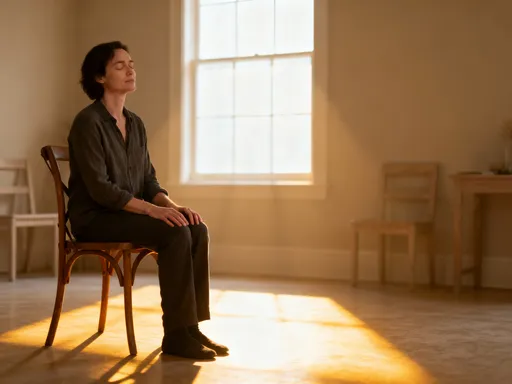
I’ll admit—I tried silent meditation first. Sat cross-legged, eyes closed, focused on my breath. Two minutes in, I was mentally rewriting my grocery list. Five minutes in, I was planning how to rearrange the pantry. My mind wasn’t calm—it was multitasking. The silence felt heavy, almost judgmental. I kept thinking, Am I doing this right? The pressure to ‘clear my mind’ made it harder to relax. That’s when I discovered meditation music—not as a shortcut, but as a bridge.
The right kind of music—soft, ambient, with no lyrics or sudden changes—acted like a gentle hand guiding my thoughts back. It wasn’t distracting. It was grounding. Instead of fighting my busy mind, I had something to rest it on. A slow piano melody. The distant sound of rain. A low hum that felt like a warm blanket for my nervous system. These weren’t just pleasant sounds. They were doing real work.
What I didn’t know at the time was that science backs this up. Studies show that calming auditory stimuli can reduce activity in the amygdala—the part of your brain that triggers the fight-or-flight response. When that area is less active, you’re less likely to react impulsively. Your prefrontal cortex—the part responsible for decision-making and self-control—gets a chance to catch up. In simple terms, soothing music doesn’t erase stress, but it helps your brain shift out of survival mode and into a state where you can actually think.
For me, this wasn’t theory. It was experience. After just a few days of listening to a five-minute ambient track while my coffee cooled, I noticed I wasn’t as quick to interrupt. I caught myself before sending that sharp reply to a text. I started taking real breaths—not the shallow, chest-level gasps of stress, but deep, belly-filling breaths that signaled safety to my body. The music didn’t make me emotionless. It made me more aware. And that awareness became my new reflex—slower, kinder, more intentional.
Choosing the Right App: Simplicity Over Features
I downloaded four different meditation apps in the first week. One had a 30-day challenge with daily affirmations. Another offered guided sessions with celebrity voices. A third had a ‘focus timer’ that played lo-fi beats. They all looked impressive, but using them felt like work. Too many choices. Too many notifications. Too much pressure to ‘get it right.’ I’d open the app, scroll through playlists, wonder which one to pick, and end up closing it without listening to anything. Sound familiar?
The app that finally stuck was the one with the least going on. No gamification. No badges. No complex menus. Just a clean screen with a few playlists: Calming Rain, Morning Light, Evening Drift. Each had three to five tracks, all under ten minutes. No voices. No instructions. Just music. I didn’t have to decide anything. I’d tap Morning Light, press play, and let it fill the room while I stirred my oatmeal or folded laundry.
That simplicity was everything. I didn’t need motivation. I didn’t need to ‘feel like it.’ The app became part of my routine—like brushing my teeth or setting the coffee maker. It wasn’t a chore. It was a quiet companion. And because it asked for so little, I gave it my attention more easily. I wasn’t trying to ‘meditate perfectly.’ I was just letting the sound be there, like background warmth.
What I learned is that consistency matters more than complexity. A fancy app with endless features only works if you actually use it. And for someone like me—juggling work, family, and a never-ending to-do list—ease of use was non-negotiable. The right tool doesn’t demand your energy. It supports you with as little friction as possible. This app didn’t change my life because it was advanced. It changed my life because it was simple enough to stick.
Building the Habit: 10 Minutes That Changed My Days
I didn’t start with big goals. No ‘I’ll meditate for 30 minutes every morning’ promises. I knew those would fail. Instead, I started with one track—just five minutes—while I drank my first cup of coffee. That was it. No special posture. No quiet room. Just me, my mug, and the soft hum of a cello in the background. Some days, I barely noticed the music. Other days, I caught myself closing my eyes, really listening. But I did it. Every day.
After two weeks, I added a second session—this time at night, while I folded laundry or prepped for the next day. The music played in the background, and I didn’t have to stop living my life to benefit from it. That was key. I wasn’t carving out extra time. I was weaving the practice into moments that already existed. And slowly, the habit deepened. It wasn’t about discipline. It was about familiarity. Like learning to drive, it went from feeling awkward to automatic.
Then came the shifts I didn’t expect. I noticed I wasn’t rushing to reply to emails. I’d read one, pause, take a breath, and respond more thoughtfully. My partner mentioned I seemed less tense during our evening conversations. I caught myself smiling more—at silly jokes, at my dog’s goofy stretches, at the way sunlight hit the kitchen floor in the afternoon. These weren’t dramatic changes. They were subtle, but they added up.
The biggest shift was internal: I started noticing the space between something happening and my reaction to it. Before, that space was invisible—like blinking. Now, I could see it. Feel it. And in that space, I had a choice. I could react the old way—sharp, fast, emotional. Or I could respond—slower, calmer, more intentional. That space didn’t come from the music alone. It came from showing up, day after day, and training my mind to pause. The music was just the guide.
Real-Life Shifts: From Reactive to Responsive at Home
One night, my three-year-old stood up at the dinner table, lifted his plate, and dropped it—on purpose. Food splattered across the floor. My old self would’ve gasped, snapped, maybe even raised my voice. I would’ve seen it as defiance, disrespect, a test of my patience. But that night, something different happened. I didn’t yell. I didn’t even sigh. I took a slow breath—deep, full—and said, ‘Wow. That was a big mess. Let’s clean it up together.’
And we did. I got a towel. He grabbed a sponge. We laughed a little at the spaghetti stuck to the leg of the chair. It wasn’t a perfect moment. But it was a present one. I wasn’t operating from frustration. I was operating from calm. And that changed everything.
Later, my husband said, ‘You handled that so well. I wouldn’t have been able to stay calm.’ I smiled, but inside, I was surprised too. This wasn’t about being a ‘better’ mom. It was about being more aware. The meditation music hadn’t erased my stress or my triggers. But it had given me a tool—a mental reset button I could press in real time. That breath I took? It wasn’t random. It was practice. It was muscle memory built from weeks of sitting with music, learning to pause.
These moments started happening more often. When my teenager forgot to text and came home late, I didn’t spiral into worry and anger. I waited, calm, and when she walked in, I said, ‘I was getting concerned. Next time, can you send a quick message?’ No lecture. No drama. Just a clear, kind boundary. She actually listened. She even apologized. That never would’ve happened before. I would’ve been too emotional to communicate clearly.
My family noticed the shift. ‘You’re different,’ my daughter said one morning. ‘You don’t yell as much.’ I didn’t correct her. I didn’t say, ‘I never yelled.’ Because sometimes, I did. But now, I was learning to respond, not just react. And that made all the difference—not just for me, but for everyone around me.
Beyond Calm: Sharper Focus and Emotional Resilience
It wasn’t just about not yelling. The benefits spilled into other areas of my life. At work, I found I could return to a task faster after an interruption. Before, if someone popped into my office or a notification pulled my attention, I’d lose my flow. It would take me twenty minutes to get back into the rhythm. Now, I’d take a breath, reset, and dive back in. I wasn’t just calmer—I was more focused.
One day, my manager gave me feedback on a project—constructive, but direct. Old me would’ve gotten defensive. I’d have spent the rest of the day replaying the conversation, worrying I wasn’t good enough. But this time, I listened. I nodded. I said, ‘Thanks for the feedback. I’ll work on that.’ And I meant it. I didn’t take it personally. I saw it as information, not judgment. That ability to receive criticism without crumbling? That’s emotional resilience. And it didn’t come from nowhere. It came from those quiet minutes with the music—training my brain to stay regulated, even when things felt challenging.
I also noticed I was making better decisions. Not big, life-altering ones. Small ones. Like saying no to an extra committee at school because I knew I didn’t have the bandwidth. Or choosing to rest instead of pushing through exhaustion. I wasn’t running on empty anymore. I was checking in with myself—am I tired? Am I stressed? Do I need a pause? And if the answer was yes, I’d play a three-minute track while I sat at the kitchen table. No guilt. No pressure. Just care.
This wasn’t about becoming superhuman. It was about becoming more human—more in tune with my emotions, more aware of my limits, more capable of kindness—to myself and others. The app didn’t fix me. I wasn’t broken. But it helped me grow into a version of myself I actually liked.
Making It Yours: How to Start Without Overthinking
If you’re thinking, ‘I don’t have time for this,’ I get it. I thought the same. But here’s the truth: you don’t need hours. You don’t need silence. You don’t need to sit perfectly still. You just need one app, one time of day, and one playlist you like. That’s it.
Start small. Maybe it’s two minutes while you wait for the kettle to boil. Maybe it’s five minutes while your kids watch a morning show. Pick a time that already exists in your day. Don’t try to add something new—just weave it in. And don’t worry about ‘doing it right.’ There’s no wrong way to listen to calming music. If your mind wanders, that’s fine. If you fall asleep, that’s fine too. The point isn’t perfection. It’s presence.
Be kind to yourself when you miss a day. Or two. Or a week. This isn’t about discipline. It’s about returning—gently, without judgment. Think of it like watering a plant. Some days you forget. But when you remember, you just pick up the watering can and keep going. The plant doesn’t punish you. It just grows, slowly, with care.
The goal isn’t to become someone who never feels stressed. The goal is to become someone who can meet stress with a little more grace. Someone who pauses before speaking. Someone who chooses their response, even when life feels overwhelming. That’s what this practice gave me. Not peace all the time—but the ability to find peace in the middle of the storm.
You don’t need a special app. You don’t need a subscription. Try one that’s free. See how it feels. Let the music be your companion, not a task on your to-do list. Let it remind you, gently, that you are more than your busyness. You are more than your stress. You are capable of calm, even in the mess.
And when you do start—when you take that first breath, that first quiet moment—you might notice something small but powerful: you feel like yourself again. Not the version running on adrenaline and coffee. The real you. The one who can smile at a spilled plate of pasta. The one who can say, ‘I’m here,’ and mean it.
This journey wasn’t about achieving zen perfection. It was about becoming more myself—calmer, clearer, more connected. That meditation music app didn’t change my life overnight. But it gave me back something precious: the power to choose my response, even in chaos. And that makes all the difference.